
So, what is the 10 3 2 1 0 rule for sleep?
If you’ve been lying awake at night, exhausted but unable to drift off, this simple countdown method might be exactly what you need.
It’s a straightforward approach that’s helping thousands of people finally get the quality sleep they’ve been craving.
Let me break down this game-changing sleep hack that’s been making waves across social media and sleep forums alike.
What Is the 10 3 2 1 0 Rule for Sleep: The Quick Version
Here’s what you need to know about this clever pre-bedtime routine:
- 10 hours before bed: Cut out all caffeine
- 3 hours before bed: No more food or alcohol
- 2 hours before bed: Stop working and start winding down
- 1 hour before bed: Turn off all screens
- 0: Zero snooze button hits in the morning
This approach was popularized by Dr. Jess Andrade back in 2021, and it’s grounded in solid sleep science.
The beauty of it?
You can start implementing changes tonight and potentially see improvements within just a few days.
Whether you’re a busy professional trying to optimize your performance, a parent desperate for better sleep between night wakings, someone dealing with chronic insomnia, or an athlete looking to maximize recovery – this rule adapts beautifully to your lifestyle.
Why This Sleep Method Is Taking Off
You’re not alone in searching for better sleep solutions. According to CDC data, about one-third of adults aren’t getting enough quality rest, which leads to brain fog, decreased productivity, and various health concerns.
People are turning to the 10-3-2-1-0 framework because it addresses the most common sleep complaints:
- Taking forever to fall asleep even when you’re exhausted
- Waking up multiple times during the night
- Still feeling tired after a full night in bed
- Relying on the snooze button to function
Unlike vague advice to “just relax more,” this method gives you specific, actionable steps backed by sleep research.
Breaking Down Each Step of the Sleep Countdown
Let’s dive deeper into what makes each number work.
For this example, let’s say your target bedtime is 10 PM.
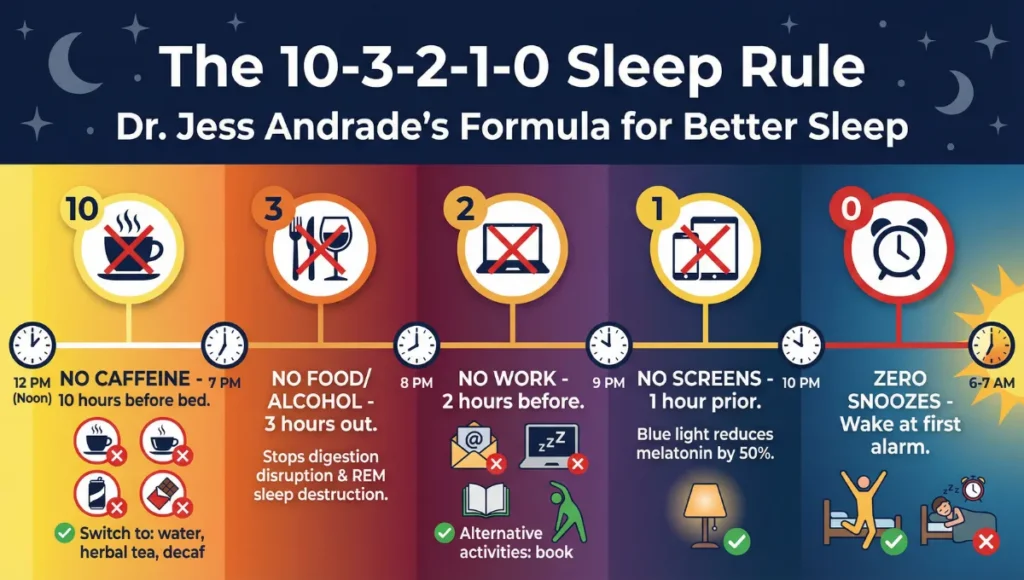
So, that said, I break down each step in detail below, but if you prefer to have a visual, then I also created this handy infographic for you too.
The 10-Hour Caffeine Cutoff
Caffeine blocks adenosine receptors in your brain—basically jamming the signals that tell your body it’s time to sleep.
But here’s the catch…
Caffeine can linger in your system for up to 10 hours.
Yep, 10 hours!
That means if you’re aiming for 10 PM bedtime, your last coffee should be at noon. This includes:
- Coffee and espresso drinks
- Black and green tea
- Energy drinks and soda
- Chocolate (yes, even that afternoon chocolate bar)
Try swapping your afternoon pick-me-up for herbal tea or water instead. Your evening self will thank you.
The 3-Hour Food and Alcohol Window
Late-night eating kicks your digestive system into high gear, raising your body temperature and triggering hormones that can interfere with melatonin production.
Alcohol might make you drowsy initially, but it seriously disrupts your REM sleep, leaving you feeling rough in the morning.
Finish dinner by 7 PM if you’re planning to sleep at 10. If you get hungry later, have a small protein-based snack well before the 3-hour mark.
The 2-Hour Work Wind-Down
Your brain needs time to shift out of “work mode” and into “rest mode.” Continuing to tackle stressful tasks right up until bedtime keeps your stress hormones elevated.
Log off by 8 PM and transition into relaxation activities—read a book, do some gentle stretching, chat with family, or practice a hobby you enjoy.
This signals to your nervous system that the workday is officially over.
The 1-Hour Screen-Free Zone
Harvard research shows that the blue light from devices can cut your melatonin production by half. That’s your natural sleep hormone taking a major hit right when you need it most.
Power down phones, tablets, computers, and TV by 9 PM. Dim your lights and try activities like journaling, light reading with a warm lamp, or meditation instead.
The Zero Snooze Commitment
Hitting snooze actually restarts your sleep cycles, creating that groggy “sleep inertia” feeling that can last for hours. You’re better off getting up at your first alarm.
Try placing your alarm across the room so you have to physically get out of bed to turn it off. It’s tough at first, but you’ll feel more alert throughout your morning.
According to Sleep Medicine Reviews, following this routine can improve sleep efficiency by 10-15%—that’s a significant upgrade for such straightforward changes.
Quick Reference Guide to the 10-3-2-1-0 Method
| Hours Before Bed | What to Avoid | Why It Matters | Alternative Actions |
|---|---|---|---|
| 10 hours | Caffeine (coffee, tea, soda, chocolate) | Blocks sleep signals for up to 10 hours | Switch to herbal tea, water, or decaf |
| 3 hours | Food and alcohol | Disrupts digestion and REM sleep | Finish dinner early; light protein snack if needed |
| 2 hours | Work and stressful tasks | Keeps stress hormones elevated | Read, stretch, relax with family |
| 1 hour | Screens (phones, TV, tablets) | Blue light cuts melatonin by 50% | Journal, meditate, dim lighting |
| 0 snoozes | Hitting the snooze button | Creates sleep inertia and grogginess | Place alarm across the room |
Example Results with Better Sleep Habits
Let me paint you some scenarios:
The Overworked Executive: A 35-year-old professional was stuck in a cycle of late-night caffeine, endless emails, and chronic exhaustion.
After adopting the 10-3-2-1-0 approach—cutting caffeine by noon, finishing dinner early, logging off at 8 PM, going screen-free at 9 PM, and conquering the snooze button—she started falling asleep faster and waking up sharper.
And those morning meetings? Much easier to handle.
The Sleep-Deprived Parent: A 28-year-old new parent adapted the rule around baby feedings, avoiding late snacks and phone scrolling, focusing instead on breathing exercises during brief rest windows.
Those better quality sleep snippets meant fewer zombie-like days.
The Shift Worker: A 50-year-old dealing with insomnia from irregular hours eliminated evening drinks and implemented early light dimming.
Combined with light therapy techniques, sleep patterns steadied significantly, with fewer hours spent staring at the ceiling.
The Athlete: A 25-year-old competitive athlete stopped heavy post-workout eating and late-night TV binges.
Deeper REM sleep stages provide crucial physical recovery, leading to noticeably better performance.
Many users report 20-30% improvements in their sleep tracker metrics after consistently following this routine.
The Benefits You Can Expect from This Sleep Strategy
When you commit to the 10-3-2-1-0 framework, here’s what you’re working toward:
Faster Sleep Onset: Research shows you can fall asleep 10-20 minutes faster thanks to improved melatonin production.
Fewer Nighttime Disruptions: Without late-night digestion issues or alcohol-induced sleep fragmentation, you’ll experience fewer wake-ups.
More Refreshed Mornings: Consistent sleep-wake cycles mean you’ll actually feel rested when your alarm goes off.
Cognitive Performance: Better REM sleep translates to sharper thinking and improved memory.
Enhanced Recovery: Athletes benefit from deep sleep’s restorative effects on muscles and tissues.
And the best part…
This approach is completely free, easy to learn, and customizable to your specific situation. You’re not relying on expensive gadgets, restrictive diets, or medication. Plus, improved sleep supports better mood, stronger immunity, and overall wellbeing.
Complementary Sleep Strategies That Work Together
The 10-3-2-1-0 rule becomes even more powerful when combined with other evidence-based sleep practices:
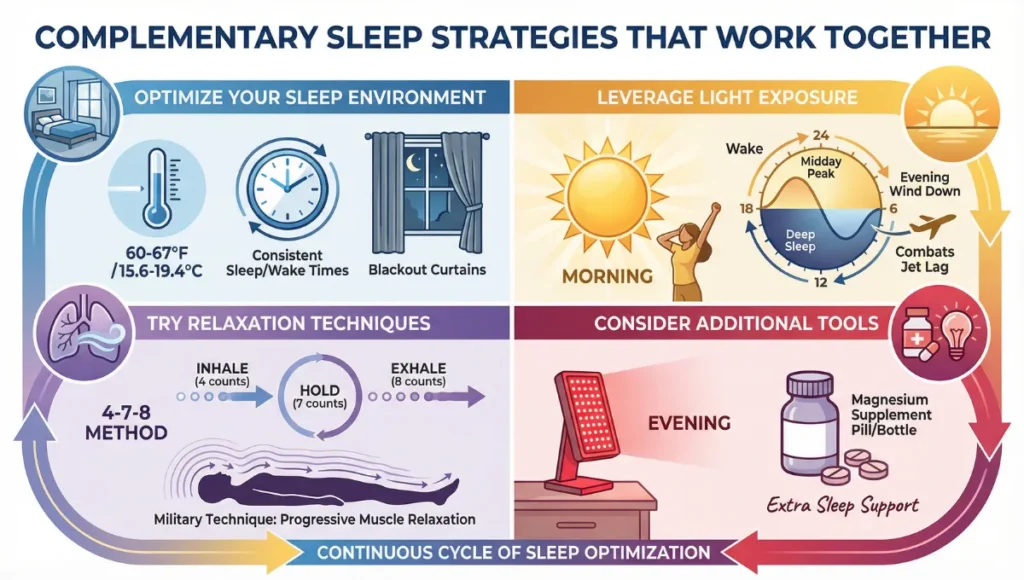
Optimize Your Sleep Environment
Keep your bedroom cool (between 60-67°F or 15.6–19.4°C), maintain consistent sleep and wake times, and invest in blackout curtains if needed.
You can read our article here for more highly effective sleep optimization techniques.
Leverage Light Exposure
Morning bright light exposure helps combat jet lag and reinforces your natural circadian rhythm.
Try Relaxation Techniques
The 4-7-8 breathing method (inhale for 4 counts, hold for 7, exhale for 8) can quickly calm anxiety before bed.
The military sleep technique, which involves progressive muscle relaxation, helps many people fall asleep within minutes.
Consider Additional Tools
Red light therapy in the evening and magnesium supplementation may provide extra support for your sleep routine.
The 10-3-2-1-0 Sleep Rule FAQs
How quickly will I see improvements?
Most people notice easier sleep onset and fewer disruptions within 3-7 days.
Full benefits, including consistent energy levels, typically emerge after 2-4 weeks of regular practice. Keep a sleep journal to track your personal progress.
Can I adjust this for my unique schedule?
Absolutely—you can customize the timing for shift work or other schedules by adjusting cutoffs, such as reducing the caffeine window to 8 hours.
The key is maintaining the core principles, especially the screen and work wind-down periods. If you have specific health concerns, consult your doctor about personalized modifications.
What if I slip up one night?
Missing a night won’t undo your progress—this is about building sustainable habits, not achieving perfection. Just resume the routine the next day and keep building momentum.
Is this safe for everyone?
The 10-3-2-1-0 rule is safe for most adults as a drug-free sleep hygiene approach.
However, if you have an eating disorder or take medications with specific timing requirements, check with your healthcare provider to ensure the guidelines don’t conflict with your treatment plan.
Does this help with jet lag recovery?
Yes, the 10-3-2-1-0 framework can help reset your circadian rhythm through timed cutoffs.
Pair it with morning light exposure for even faster adjustment to new time zones.
What should I eat if I get hungry late?
Instead of breaking the 3-hour food cutoff, opt for early alternatives like chamomile tea or a small handful of nuts.
These options curb hunger without disrupting digestion or melatonin production.
Why is alcohol specifically mentioned?
Alcohol might make you drowsy initially, but it fragments your sleep and disrupts REM cycles, according to Mayo Clinic research. This leads to poor recovery and groggy mornings—exactly what we’re trying to avoid.
Can children benefit from this approach?
Kids can use an adapted version with shorter time windows and extra emphasis on the screen-free hour. Add fun wind-down activities and consult your pediatrician for age-appropriate modifications.
What about sleep supplements?
Consider adding supplements like magnesium or valerian root only after you’ve established the core 10-3-2-1-0 habits.
They can enhance relaxation and melatonin production, but talk to your doctor first to ensure safe integration with your routine.
Your Next Steps Toward Better Sleep
So, now you know what is the 10 3 2 1 0 rule for sleep!
This scientifically-backed, easy-to-implement strategy is helping professionals, parents, insomnia sufferers, and athletes reclaim their nights and energize their days.
You don’t need to overhaul your entire life tonight. Start with one or two elements—maybe cut your afternoon coffee or set a screen curfew—and build from there.
Small wins compound over time.
If you’ve been consistently following the routine for a month and still struggling with sleep quality, it’s worth scheduling a conversation with your healthcare provider to rule out underlying sleep disorders.
Ready to transform your nights? The countdown starts now.