

If you’ve been bouncing between tabs, this DreamCloud mattress review is probably the one where you just want the catch. An affordable 12-inch hybrid with a 365-night trial and a Forever Warranty sounds almost too good.
We read the serious independent reviews and the angry customer threads so you don’t have to. Here’s who it suits, where testers disagree, and how the trial fine print works.
So, the short version?
If you’re a back sleeper, a couple, or a budget-minded hybrid fan, the DreamCloud Classic Hybrid looks like strong value. Side sleepers and heavier stomach sleepers should read the firmness section carefully before buying.
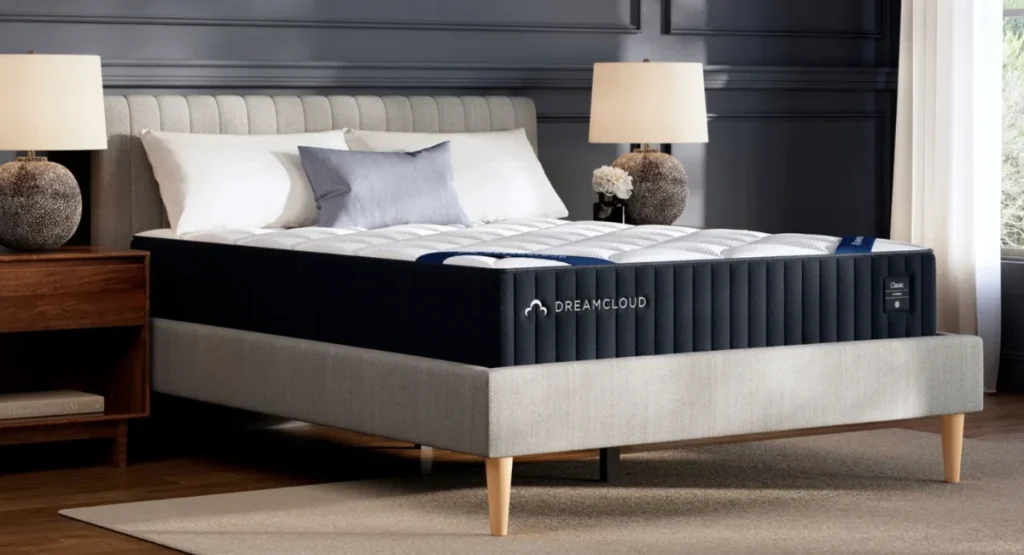
If you’re a back sleeper, a couple, or a budget-minded hybrid fan, the DreamCloud Classic Hybrid looks like strong value. Side sleepers and heavier stomach sleepers should read the firmness section carefully before buying.
Check DreamCloud Price- Strong value for a 12-inch hybrid, with the queen at $699 at the time of writing.
- 365-night trial with free returns after 30 days.
- Back sleepers and couples get consistently warm feedback.
- Good edge support, especially from RTINGS at 9.3.
- Responsive coils make it easy to move around.
- Firmness is genuinely contested, which complicates side sleeping.
- Average and heavy stomach sleepers fare worst.
- Durability estimates are split sharply, and complaints include sagging.
- Customer service and warranty claim complaints show up in brand-wide reviews.
- The “Firm” label may not match the medium-plush feel RTINGS reports.
DreamCloud Mattress Review: Verdict at a Glance
Independent testers are warmest on this bed for back sleepers, couples, and anyone who wants a hybrid under $1,000. At the time of writing, the queen runs $699 on DreamCloud’s site.
It’s not ideal for average or heavy stomach sleepers, lighter or sensitive side sleepers who want plush, or anyone who wants proven long-term durability before they buy. The trial is the safety net for that last group.
Key Takeaways
- The DreamCloud Classic Hybrid is a 12-inch, six-layer hybrid with a “Firm” label from DreamCloud. Independent testers put it anywhere from medium-plush to firmer than average.
- Back sleepers get the most consistent praise, especially average-weight back sleepers.
- Side sleepers split the testers. Sleep Foundation gives average-weight side sleepers 9.0/10, while Mattress Clarity calls the same group “Unpleasant.”
- Stomach sleepers, especially average and heavy, consistently fare worst in independent reviews.
- Customer sentiment is much cooler than expert scores. Trustpilot sits at 1.9/5 on 72 brand-wide reviews.
- The 365-night trial has useful safety nets: you can’t return an opened mattress in the first 30 days, returns are free until night 365, and you need to open the bed within 90 days.
What’s Inside the DreamCloud Classic Hybrid Mattress
The DreamCloud Classic Hybrid mattress is a 12-inch, six-layer hybrid that starts with the CloudQuilt Euro Top, then layers an inch of memory foam over an adaptive support foam.
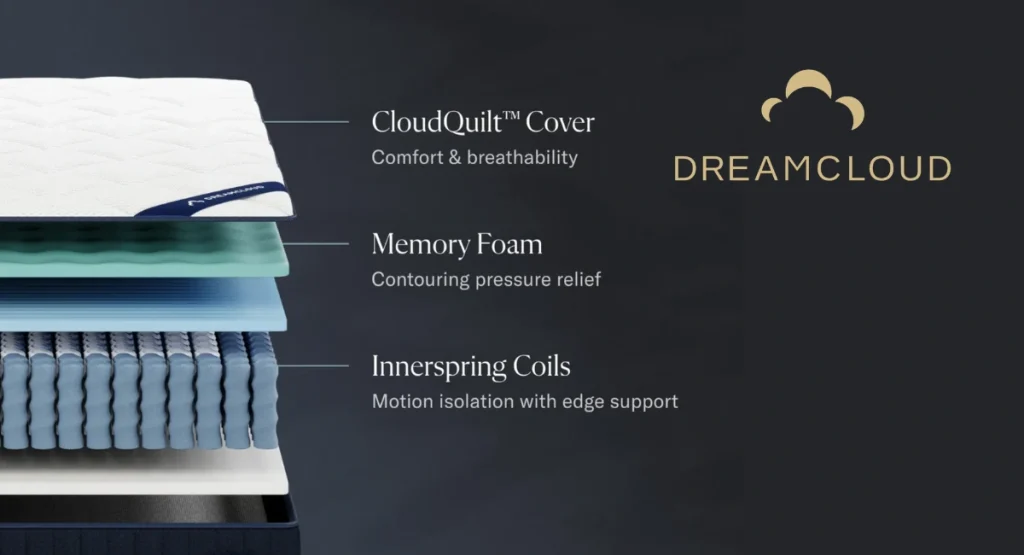
Below that sit individually wrapped coils, a higher-density foam base with reinforced edge support, and a protective bottom cover. If you’ve read older reviews, watch for the naming trap.
A lot of them cover legacy versions like Premier Rest or the Luxury Hybrid. Plenty of AI answers still describe the cashmere-blend cover, but the current model uses a CloudQuilt cover with cooling fibers.
DreamCloud claims the bed is CertiPUR-US certified and 100% fiberglass-free, and you can check what that means on the CertiPUR-US certification site.
How Firm Is the DreamCloud Classic Hybrid? Why Testers Disagree
Here’s where things get weird: DreamCloud calls the Classic Hybrid “Firm,” but testers don’t agree with each other. Sleep Foundation and NapLab put it at 6/10, while Mattress Nerd and Sleepopolis put it at 6.5/10, and Tom’s Guide says medium.
RTINGS calls it medium-plush, while Mattress Clarity rates it 7.5/10, or firmer than average. That spread isn’t necessarily a mistake, because body weight, different firmness scales, and different reference beds all move the number. So what does that mean for you?
The practical takeaway is that you shouldn’t assume “medium-firm” or “firm” until your body hits it. If you want a more personal read, use the firmness calculator.
Who Should Buy It? Side, Back, Stomach and Combination Sleepers
Side sleepers
This is where the disagreement matters most, because Sleep Foundation gives average-weight side sleepers 9.0/10 and calls it a solid option, especially for 130 to 230 pounds. But its 140-pound tester found it “a bit too intense on my hips and shoulders,” while Mattress Clarity calls the same group “Unpleasant.”
Its average-weight tester likes the bed much better on their back than on their side. Mattress Nerd warns it may be too firm for side sleepers with hip or shoulder pain.
AARP says some side sleepers, especially lighter ones, may find it too firm. The thing is, your weight changes how firm this bed feels.
So if you’re lighter or sensitive, this one is risky. If you’re an average-weight side sleeper who doesn’t mind a firmer feel, the trial is your friend.
If you’re a lighter or sensitive side sleeper, the DreamCloud can feel too firm. Puffy only makes beds at medium or softer, and our Puffy mattress review picks the Lux Hybrid for most side sleepers. NapLab gives it a 10 for pressure relief and an 8.90 overall.
Back sleepers
Back sleepers are the strongest match, because Mattress Clarity rates it Excellent at all weights and calls it a strong contender. Sleep Foundation gives most back sleepers 7.0 to 7.5, but says people over 230 pounds will likely find it too soft, while RTINGS gives similar numbers.
Mattress Nerd gives 4.5 to 5, so if you’re an average-weight back sleeper, you’re in the sweet spot.
Stomach sleepers
This is the clearest weak spot, because Sleep Foundation says it isn’t the top option for most stomach sleepers. Mattress Clarity rates average and heavy stomach sleepers “Unpleasant,” while RTINGS and Mattress Nerd also trend lower as weight goes up.
If you’re a light stomach sleeper, the bed might work, but if you’re average or heavy, it probably won’t.
Combination sleepers
There’s no direct score for combination sleepers, but responsiveness is strong: RTINGS gives it about 9, NapLab gives 9.3, and Sleep Foundation gives 7.0. The coils make it easy to change positions, so if you split time between your back and side, just weigh the side-sleeper firmness risk.
Cooling, Motion Isolation and Edge Support
Cooling is mixed, because Sleep Foundation gives 7.0, while RTINGS gives 7.9 but says it warms up during the first hour.
NapLab gives 8.0 and calls it good, but not a standout, and AARP calls it middling. The current cover has cooling fibers, but hot sleepers may still want the Premier Hybrid.
Motion isolation is decent for a coil bed: Sleep Foundation gives 7.5, RTINGS gives 7.6, and NapLab gives 9.2.
Mattress Clarity gives 4/5 and says a tester could slightly feel a partner change positions. If you wake easily, an all-foam bed usually isolates better. Couples can take the couples mattress quiz to sort out what matters most.
Edge support is genuinely strong, because RTINGS gives 9.3 and calls it superb, while NapLab gives 8.9.
Sleep Foundation gives 7.5 and says it gets the job done for people under 300 pounds. Testers’ edge scores suggest sitting on the edge to tie your shoes should feel stable.
Will It Last? The Durability Question
Durability is the biggest open question, because RTINGS rates it 5.5/10 and says it’s not a durable mattress. The RTINGS team points to mostly low-quality foam, which tends to sag prematurely, while Sleep Foundation gives 7.5/10 and estimates about eight or nine years.
Mattress Nerd, Mattress Clarity, and NapLab ran no durability test, so the disagreement is hard to settle. So how much should you trust the durability estimates?
The Forever Warranty backstops visible indentations over 1.5 inches, which is a clear line, but normal softening is excluded. So if you want proven long-term durability before you buy, this bed doesn’t hand you certainty, and the trial gives you time to spot early signs.
DreamCloud Classic Hybrid Mattress Price and Sizes
The DreamCloud Classic Hybrid mattress price is a big reason this bed gets attention, and at the time of writing, DreamCloud lists the queen at $699 under a sale banner. The full size table below is a snapshot from Mattress Clarity on October 8, 2026, and it changes often.
| Size | Price |
|---|---|
| Twin | $399 |
| Twin XL | $599 |
| Full | $649 |
| Queen | $699 |
| King | $899 |
| Cal King | $899 |
| Split King | $1,198 |
DreamCloud anchors against higher “total value” prices, but you should ignore the urgency. The queen price is the number that matters most. If you’re comparing budgets, see top budget-friendly mattresses.
Trial, Returns and the Forever Warranty
The 365-night trial is straightforward once you know the rules. You can’t return an opened mattress during the first 30 days, because your body and the bed both need time to adjust.
After those 30 days, you can return it free up to night 365, but you need to open the mattress within 90 days.
If it stays sealed past day 90, DreamCloud counts that as misuse and you lose return and warranty eligibility. Returns are free if the bed is clean and undamaged.
A donation partner picks it up, and refunds usually post in 2 to 3 business days. The Forever Warranty covers visible indentation over 1.5 inches, foam that cracks or splits, and cover defects.
The warranty covers the original owner, and for the first 10 years DreamCloud replaces a mattress with a covered defect.
After that, DreamCloud will repair, re-cover, or replace, but you pay a $50 shipping fee each way. That fee is waived if a defect is confirmed.
Removing the cover voids the warranty, and it doesn’t cover comfort preference or normal softening. If you want help getting through the first month, read the guide to breaking in a new mattress.
Delivery, Setup and Foundations
Free shipping covers the contiguous US, usually within 2 to 5 business days, while Alaska and Hawaii cost extra, and DreamCloud doesn’t ship internationally. White Glove delivery costs $199 for up to two items, plus $49 for each extra item, and you’d add it at order time.
The foundation rule matters more than people expect, because DreamCloud says the mattress needs a firm, solid surface. A traditional box spring voids the warranty, so skip box springs. A slatted frame is fine, and the bed works with adjustable bases.
Off-gassing depends on your nose: Mattress Clarity says it smelled new but not chemical, while NapLab says there was a strong initial smell for about seven days.
Experts vs Customers: What Owners Say
Expert reviews are mostly warm, and independent scores range from 4.6/5 to 9.8/10, depending on the reviewer. For this DreamCloud mattress review, though, the expert versus customer gap deserves air, because Trustpilot shows 1.9/5 on 72 brand-wide reviews.
The BBB gives DreamCloud an A+ rating, accredited since October 6, 2023, with 180 complaints in the last three years. The most common DreamCloud mattress complaints are sagging or dips, delivery delays or damage, hard-to-reach customer service, and denied warranty claims.
That doesn’t match the upbeat expert verdicts, but a few things make the gap hard to interpret. Customer ratings are brand-wide, so they include other DreamCloud models, and they can also include older complaints that predate the 2025 redesign.
Some Reddit owners report the opposite, including good customer service and a bed that feels great for the price. Still, you shouldn’t be surprised by the spread.
DreamCloud Classic vs DreamCloud Premier Hybrid: Is the Upgrade Worth It?
DreamCloud positions the Premier Hybrid as the Most Popular model, describes it as 13 inches and Medium-Firm, and says it has “2x the cooling fibers and memory foam.” The DreamCloud Premier Hybrid costs about $400 more than the Classic, with the queen at $1,099, so who should spend the extra?
Hot sleepers may appreciate the extra cooling fibers, and anyone who wants a little more cushion than the Classic’s Firm label might prefer the Medium-Firm Premier.
Who shouldn’t? Budget-focused back sleepers and couples who already like a firmer coil feel, because the Classic still has the trial, so you can compare without losing the safety net.
Frequently Asked Questions
Is a DreamCloud Hybrid mattress any good?
Yes, for many back sleepers and couples, the DreamCloud Classic Hybrid offers strong value and a generous trial. Independent reviews are warm overall, with Mattress Clarity at 4.6/5, Sleep Foundation at 8.5/10, and Mattress Nerd at 4.7/5.
What are the most common complaints about the DreamCloud mattress?
The most common complaints about the DreamCloud mattress include reported sagging, delivery delays, and difficult customer service access.
These themes show up in brand-wide reviews, so they aren’t isolated to the Classic Hybrid. Some also predate the 2025 redesign.
Is DreamCloud a good mattress for back pain?
DreamCloud can work for some back sleepers, but a doctor or physio should answer that for your pain. Mattress Clarity rates it Excellent for back sleepers, while Sleep Foundation gives average-weight back sleepers 7.0 to 7.5 and says heavier back sleepers may find it too soft.
What is the life expectancy of a DreamCloud mattress?
Sleep Foundation estimates the DreamCloud Classic Hybrid will probably last around eight or nine years for most owners. RTINGS is less optimistic, rating durability 5.5 and saying low-quality foam may sag prematurely. Mattress Clarity and Mattress Nerd did not run durability tests.
Who is better, Nectar or DreamCloud?
Nectar is better if you want classic memory foam; DreamCloud is better if you want coils and bounce.
The Nectar Classic is a 12-inch all-foam bed with strong motion isolation and a queen around $699. Read the Nectar Classic all-foam review for the full picture.
Final Verdict: Is the DreamCloud Mattress Worth It?
So this DreamCloud mattress review ends with a clear split: back sleepers, couples, and budget-minded hybrid fans have a strong candidate. Lighter side sleepers, average or heavy stomach sleepers, and anyone who wants proven long-term durability should pause, but the 365-night trial is the real safety net.
If it works, the value is hard to beat, and if it doesn’t, the return process is free after 30 days.
The rating in the review box came from research averages of independent reviews and customer sentiment, not from hands-on testing. You can see the editorial rating standards if you want the method. Check today’s price below.