

Your new mattress just arrived, but instead of sinking into cloud-like comfort, you’re lying on what feels like a concrete slab.
You’re not alone—and you don’t have to wait weeks for relief.
Data shows sleeping on a hard mattress increases your chances of poor sleep by 78%.
The good news?
You can actively speed up the break-in process using proven methods that work with your mattress’s materials, not against them.
This guide shows you exactly how to break in a new mattress quickly, transforming initial firmness into personalized comfort in days instead of weeks.
Key Takeaways
- New mattresses feel firm initially because dense foams and coils haven’t conformed to your body yet
- Most mattresses take 2-4 weeks to break in, but you can accelerate this process significantly
- Active use beats passive waiting—sitting, lying down, and moving across the entire surface speeds up settling
- Heat softens memory foam faster, making body warmth and slightly warmer rooms helpful for foam-based mattresses
- Regular rotation (every 1-2 weeks initially) ensures even wear and faster overall comfort
- A proper foundation is essential for even pressure distribution and optimal break-in
- Temporary toppers provide immediate relief while your mattress completes its break-in period
The Break-In Timeline: What to Expect
Memory foam and latex mattresses typically require 2 to 4 weeks to fully break in. Innerspring and hybrid mattress designs often feel comfortable within 1-2 weeks, though they continue improving with use.
Your active involvement changes everything.
By applying the techniques in this guide, you can expect noticeable softening within 3-5 days for most mattress types.
Full break-in might still take 1-2 weeks, but you’ll experience progressive comfort improvements each night rather than waiting passively for change.
This timeline assumes consistent sleep (7-8 hours nightly) and deliberate application of break-in methods. Sporadic use will naturally extend the process, so commitment during the initial period is essential for faster results.
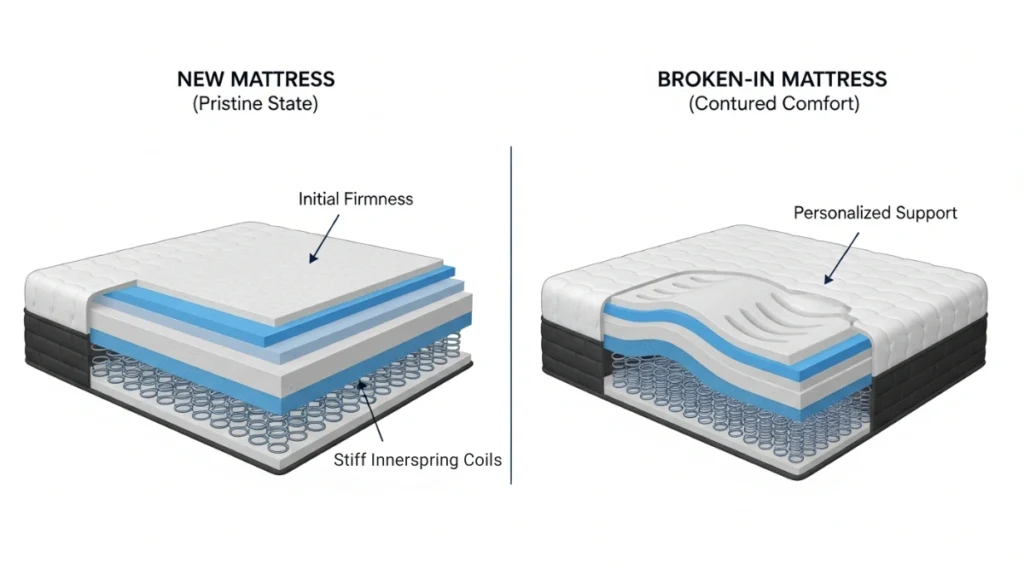
7 Proven Tips For How To Break In a New Mattress QUICKLY for Instant Comfort
Tip 1: Don’t Just Sleep On It – Actively Use It Throughout the Day
Sleeping alone won’t maximize your break-in speed. Your mattress needs varied pressure across its entire surface to settle evenly and quickly.
Active use means intentionally spending time on your mattress beyond nighttime sleep.
Sit on the edges while putting on shoes. Lie down to read, watch TV, or scroll your phone. Even gentle walking across the surface helps compress the materials—especially beneficial for dense memory foam layers.
This “living break-in” approach ensures every part of your mattress experiences pressure. The varied weight distribution from different positions and movements accelerates the conforming process significantly compared to sleeping in one spot for eight hours.
The benefit? Your mattress develops personalized support across the entire surface, not just in your primary sleeping zone.
Tip 2: Maximize Sleep Time and Use the Entire Sleep Surface
Consistent, prolonged pressure is the foundation for breaking in a new mattress quickly. Aim for at least 7-8 hours of sleep per night during the initial break-in period.
More time equals faster results.
Deliberately change your sleeping position throughout the night. If you sleep alone, rotate which side of the bed you use—sleep near the edge one night, in the middle the next.
This prevents concentrated body impressions in a single area. Instead, you’re promoting even settling across the entire mattress, which creates uniform comfort and extends your mattress’s lifespan.
For couples, this happens naturally as two people occupy different zones. Solo sleepers need to be more intentional about spreading their weight distribution.
The payoff is a mattress that feels consistently comfortable regardless of where you sleep, rather than having one “broken-in spot” and firm areas elsewhere.
Tip 3: Harness the Power of Heat (Especially for Memory Foam)
Heat is your secret weapon for foam-based mattresses. Memory foam is specifically designed to soften when warm, allowing it to contour more deeply to your body shape.
Your body heat naturally warms the foam during sleep.
You can accelerate this process by slightly increasing your bedroom temperature for the first few nights—even 2-3 degrees makes a difference. Some people use a heating pad on low for short periods (15-20 minutes) on different mattress areas when not sleeping.
Never use high heat or leave heating devices on unattended. The goal is gentle warmth that mimics prolonged body heat, not extreme temperatures that could damage materials.
This technique works exceptionally well for memory foam mattresses and hybrid mattress constructions with foam comfort layers. Innerspring mattresses see minimal benefit from heat, as metal coils don’t soften with temperature changes.
For latex mattresses, heat has a moderate effect—comfortable room temperature supports optimal performance without needing additional warmth.
Tip 4: Rotate Your Mattress Regularly for Even Settling
Rotation is both a maintenance practice and a break-in accelerator. Most mattresses should be rotated head-to-foot every 3-6 months after breaking in.
During the first month? Rotate every 1-2 weeks.
This frequent rotation ensures different parts of your mattress receive pressure and heat from your body. For innerspring and hybrid mattress designs, rotation helps coils compress uniformly rather than developing uneven wear patterns.
For foam and latex mattresses, rotation promotes consistent density across the surface. This prevents one section from becoming significantly softer than another, which would compromise support.
The process takes less than two minutes but dramatically improves how evenly your mattress breaks in. You’ll avoid the common problem of a comfortable sleeping zone surrounded by firmer, less-settled areas.
Note: Most modern mattresses aren’t designed for flipping (only one side has comfort layers), but rotation remains highly effective.
Tip 5: Ensure a Proper, Supportive Foundation
Your foundation matters more than most people realize. An inadequate base prevents even pressure distribution, which slows the break-in process and can cause premature sagging.
Your mattress needs a firm, level surface.
Check your manufacturer’s recommendations—this might be a slatted base (with slats spaced no more than 3 inches apart), a solid platform base, or a quality box spring. The foundation should support the entire mattress evenly without sagging or gaps.
A proper foundation allows materials to settle as designed. Foam layers compress uniformly. Innerspring coils find their optimal position without stress. The comfort layers can perform their job effectively.
Without this support, your mattress works against poor weight distribution. This not only slows break-in but can create permanent structural issues that void your warranty.
The investment in a quality foundation protects your mattress investment and accelerates the comfort you’re seeking.
If you’re still deciding on a mattress or considering a replacement, it can also be helpful to review some well-made affordable mattresses designed to work with supportive foundations.
Many modern options are built to soften evenly over time when paired with the right base, which can make the break-in process more comfortable and predictable.
Tip 6: Use a Temporary Mattress Topper for Immediate Relief
A mattress topper doesn’t break in your mattress—but it provides instant comfort while the break-in happens underneath. This is especially valuable if initial firmness is disrupting your sleep quality.
Think of it as a comfort bridge.
Choose a softer memory foam or down-alternative topper that complements your mattress type. A 2-3 inch topper typically provides sufficient cushioning without compromising the underlying support structure.
This allows you to sleep soundly during your mattress’s trial period while the materials settle naturally. You’re not masking a defect—you’re managing comfort during a normal adjustment phase.
Once your mattress reaches its intended comfort level (usually 2-4 weeks), you can remove the topper and experience the mattress as designed. Or keep it for additional softness if you prefer.
This strategy is particularly helpful for side sleepers who need immediate pressure relief on shoulders and hips, or anyone using their trial period to evaluate a mattress.
Tip 7: Optimize Your Sleep Environment
Your bedroom environment affects how quickly materials settle and how comfortable the break-in feels. Room temperature, humidity, and airflow all play supporting roles.
As mentioned, slight warmth helps foam materials.
Good ventilation dissipates manufacturing odors (common with new mattresses) and allows materials to breathe properly. This supports the natural settling process without interference from trapped moisture or stale air.
A cool, dark, quiet room promotes better sleep quality overall. When you sleep more soundly, your body remains still for longer periods, applying consistent pressure that aids the break-in.
While not a direct break-in method, environmental optimization makes the adjustment period feel less noticeable. You’re supporting your body’s natural sleep patterns while your mattress develops its personalized comfort.
Approximately 90% of mattress buyers prioritize sleep quality over quantity, making environmental factors worth optimizing alongside your break-in efforts.
Material-Specific Fast-Track Strategies
Breaking In a Memory Foam Mattress Fast
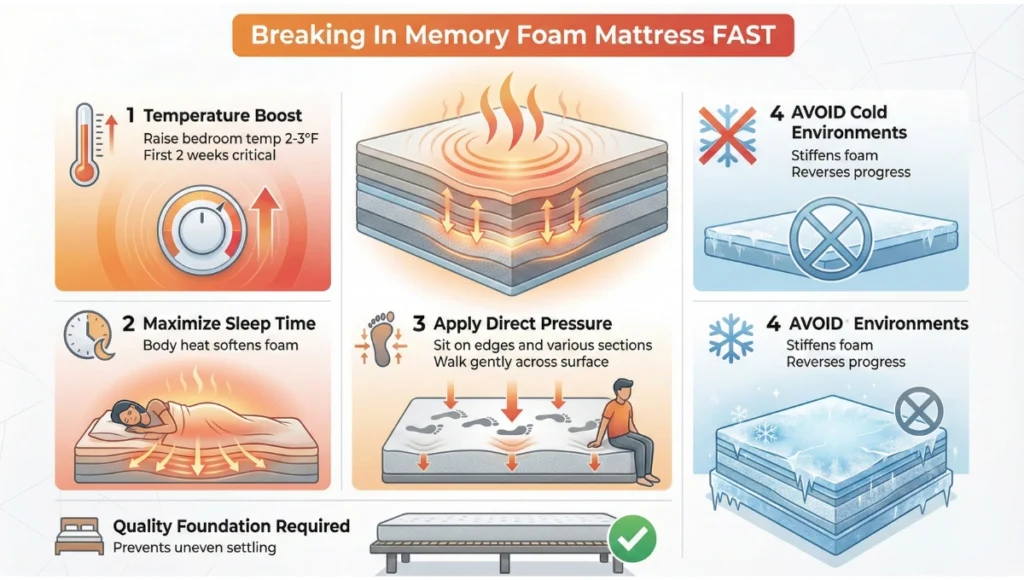
Memory foam requires the most patience but responds exceptionally well to heat and pressure. Focus heavily on maximizing your sleep time and using your body heat to soften the viscoelastic materials.
Increase your bedroom temperature by 2-3 degrees during the first two weeks.
Apply direct pressure by sitting on edges and various sections when awake. Walk gently across the surface to compress dense foam layers more effectively than light use alone.
Avoid cold environments—they stiffen memory foam and reverse your progress. A quality foundation prevents uneven settling in these dense materials.
Accelerating Comfort for Innerspring and Hybrid Mattresses
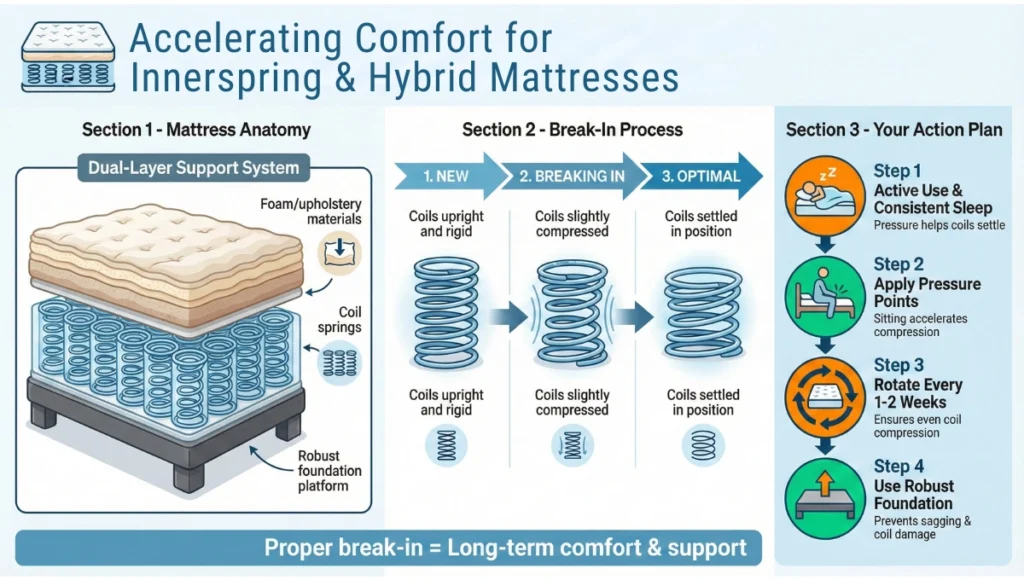
Innerspring and hybrid mattress designs rely on coils for support, layered with foam or upholstery materials. The break-in involves coils settling into position and cushioning layers compressing.
Active use and consistent sleep time are your primary tools here.
The pressure from sleeping and sitting helps coils reach their optimal resting position. Rotation every 1-2 weeks is especially important to ensure even coil compression and prevent one side from softening faster.
A robust foundation is essential—it prevents coils from damaging the frame or sagging prematurely, which would compromise both break-in and long-term support.
Fast-Tracking Latex Mattress Comfort
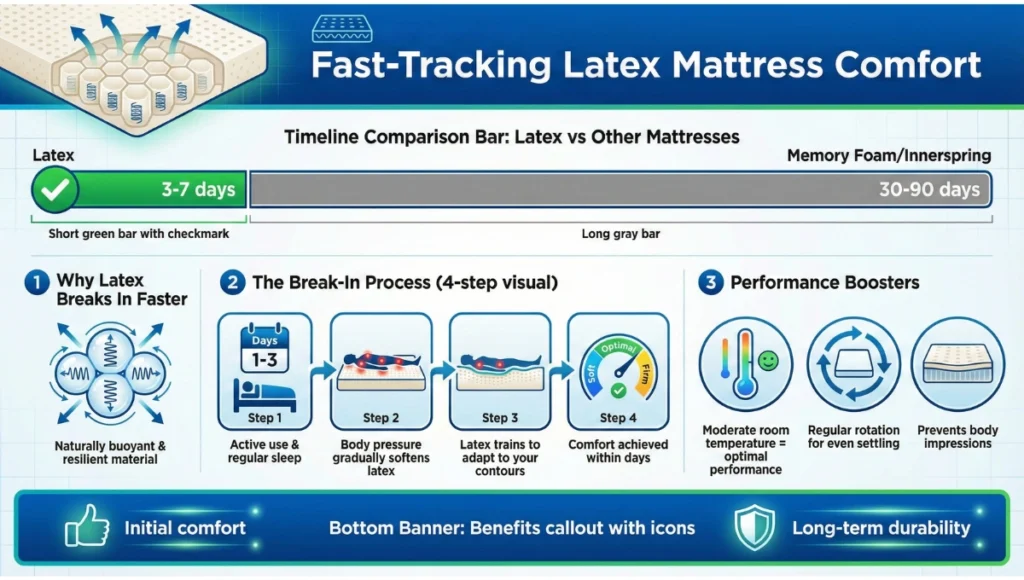
Latex mattresses have the shortest break-in period because the material is naturally buoyant and resilient. Most latex beds feel comfortable within days rather than weeks.
Active use and regular sleep still accelerate the process.
Your body’s pressure gradually softens the latex and trains it to adapt to your contours. While latex is less temperature-sensitive than memory foam, comfortable room temperature supports optimal performance.
Regular rotation ensures even settling and prevents localized body impressions over time, maximizing both initial comfort and long-term durability.
Making the Most of Your Mattress Trial Period
Understanding the Trial Period Paradox
Most online mattress companies offer trial periods ranging from 100 to 365 nights. This generous window exists specifically because mattresses need time to break in.
Don’t judge your mattress on day one.
The trial period is your opportunity to implement these break-in strategies and experience your mattress as it’s meant to perform. Many companies report that customer satisfaction increases significantly after the initial 2-3 weeks once materials have settled.
View initial firmness as expected, not problematic. Give your mattress at least 30 days of consistent use and active break-in before making a final decision.
What to Monitor During Break-In
Pay attention to specific comfort indicators as your mattress settles. The surface should gradually yield more to your body’s contours, especially around pressure points like hips and shoulders.
Your spine should feel neutrally aligned in all sleeping positions.
Notice how quickly the mattress returns to shape after you get up—it should feel responsive, not sluggish. Memory foam will be slower than latex or innerspring, but it shouldn’t feel like you’re stuck.
Look for progressive improvement rather than instant transformation. Each week should feel noticeably better than the last if break-in is progressing properly.
When to Worry: Signs Your Mattress Isn’t Breaking In Properly
Persistent Discomfort After 30 Days
Some adjustment is normal. Ongoing pain isn’t.
If you experience continued back pain, stiff joints, or general discomfort after 30 days of consistent use and break-in techniques, your mattress may not suit your body type or sleeping style.
The break-in period should enhance comfort, not cause persistent problems. Research shows a medium-firm mattress provides better sleep quality, but “medium-firm” feels different to everyone based on body weight and sleeping position.
Excessive Sagging or Uneven Body Impressions
All mattresses develop slight body impressions over time from consistent pressure. Normal settling differs from defective sagging.
Impressions deeper than 1.5 inches indicate a problem.
If deep dips don’t disappear when you’re not on the mattress, or if one section sags significantly more than others, you’re likely dealing with a manufacturing defect rather than normal break-in.
This unevenness compromises support and prevents proper spinal alignment, which defeats the purpose of a new mattress.
Next Steps: Warranty and Customer Support
If you’ve applied these techniques for 30+ days and still experience issues, contact customer support. Document your concerns, including purchase date and steps you’ve taken to break in the mattress.
Most reputable companies honor their comfort guarantees.
Your warranty typically covers manufacturing defects like excessive sagging. Have photos ready showing any visible impressions or uneven areas to expedite the resolution process.
Industry data shows revenue falling 0.6% in 2025 amid inflation fatigue, making your investment even more significant—don’t settle for a mattress that doesn’t deliver promised comfort.
Frequently Asked Questions
Why is breaking in a new mattress important?
Breaking in allows foam, latex, and innerspring coils to conform to your unique body shape and sleeping habits. This process enhances pressure relief, improves spinal alignment, and unlocks the comfort and support you paid for.
How long does it typically take to break in a new mattress?
Memory foam and latex mattresses typically require 2 to 4 weeks. Innerspring and hybrid mattress designs often feel comfortable within 1-2 weeks but continue improving with use. Active break-in techniques can reduce these timeframes significantly.
Can heat really speed up the break-in process?
Yes, especially for memory foam. Body heat naturally softens viscoelastic foam, allowing deeper contouring. Slightly increasing room temperature or using gentle warming methods accelerates this effect. Innerspring mattresses see minimal benefit from heat.
Should I rotate or flip my new mattress?
Rotate your mattress head-to-foot every 1-2 weeks during break-in for even wear. Most modern mattresses aren’t designed for flipping since comfort layers exist only on top, but rotation significantly speeds even settling.
What mistakes should I avoid when breaking in a mattress?
Don’t expect instant results without any adjustment period. Avoid neglecting active use beyond sleeping, skipping rotation, or using an inadequate foundation. Never use excessive heat or aggressive methods that could damage materials.
Final Thoughts
Learning how to break in your new mattress quickly can transform your sleep experience from frustrating to restorative.
The seven techniques in this guide—active use, maximized sleep time, strategic heat application, regular rotation, proper foundation support, temporary toppers, and environmental optimization—work together to accelerate the natural settling process.
Your mattress type determines which strategies matter most.
Memory foam responds exceptionally well to heat and pressure. Innerspring and hybrid mattresses benefit most from consistent use and rotation. Latex naturally breaks in faster but still improves with deliberate techniques.
The investment is worth your attention. By actively engaging with your new mattress during the first 2-4 weeks, you’ll experience personalized comfort significantly faster than passive waiting allows.
Monitor your progress, give your mattress a fair trial, and don’t hesitate to use your warranty or comfort guarantee if genuine problems arise.
Quality sleep is essential for overall wellbeing—your new mattress should deliver that promise once properly broken in.