
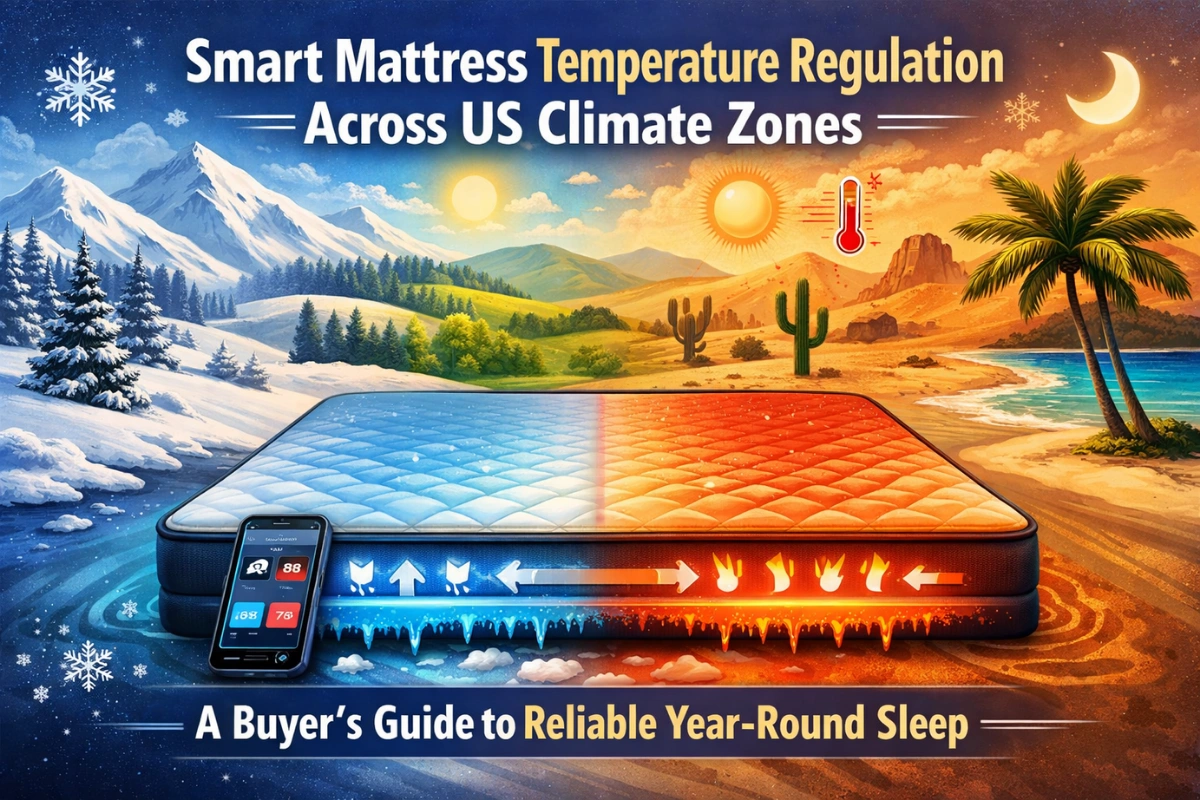
Getting a good night’s sleep shouldn’t depend on the weather outside. Yet millions of Americans toss and turn because their mattress can’t handle summer heat or winter cold.
If you’ve landed here, you’re probably tired of waking up drenched in sweat or shivering under extra blankets and are now researching smart mattress temperature regulation.
The good news?
Smart mattresses with active temperature control can solve this problem, no matter where you live.
This guide cuts through the marketing noise to show you which mattresses actually deliver reliable temperature regulation across all US climate zones—from Arizona summers to Minnesota winters.
Smart Mattress Temperature Regulation: Key Takeaways
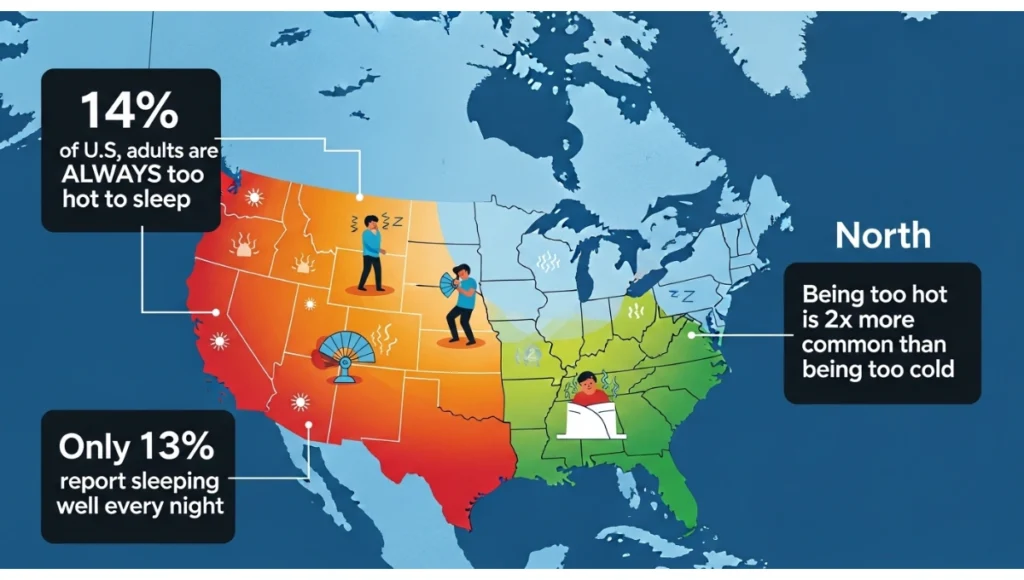
- Temperature fluctuations during sleep reduce sleep quality by up to 20% and decrease deep sleep duration
- Smart mattresses use active heating and cooling systems to maintain precise temperatures between 55°F and 110°F
- Dual-zone temperature control allows couples to set different temperatures on each side of the bed
- Advanced models combine AI sleep tracking with automatic temperature adjustments throughout the night
- Top performers include Eight Sleep Pod 5, Tempur-Pedic ActiveBreeze, Bryte Balance, and Saatva Solaire
- Investment ranges from mid-range to premium, with features directly tied to price point
The smart mattresses most consistently praised for reliable temperature regulation across US climate zones are:
- Eight Sleep Pod 5
- Tempur-Pedic ActiveBreeze
- Bryte Balance
- Saatva Solaire
These smart mattresses use active cooling/heating (not just “cooling foam”) and offer dual-zone control.
That said, each mattress offers some unique features that can further improve your deep sleep experience. See below for details.
Top Smart Mattresses for Year-Round Climate Control
Since you’re reading this article you’re likely wondering, which smart mattresses offer reliable temperature regulation across US climate zones?
Well, several brands lead the market in reliable temperature regulation.
These models have proven track records for handling diverse US climates. Each offers unique strengths that suit different needs and preferences.
Eight Sleep Pod 5

The Eight Sleep Pod consistently ranks as the most advanced climate control system available.
Temperature range: 55°F to 110°F on each side independently. This wide range handles extreme cold and heat effectively.
Smart Temp Autopilot represents the standout feature. The system uses ambient room sensors combined with your sleep tracking data to make automatic temperature adjustments. As you move through sleep stages, the Pod proactively changes temperature to optimize comfort and sleep quality.
Dual-zone control allows completely independent settings for each side. Partners with drastically different preferences both get exactly what they need.
Comprehensive sleep tracking includes heart rate variability, respiratory rate, and detailed sleep stage analysis. The app provides actionable insights rather than just raw numbers.
Best for: Couples with different temperature needs, hot sleepers, anyone living in climates with extreme seasonal variation, and users who want the most advanced automated temperature management.
Considerations: Premium price point reflects advanced technology. Requires ongoing membership for full feature access.
Tempur-Pedic TEMPUR-ActiveBreeze Smart Bed

Tempur-Pedic combines decades of mattress expertise with active cooling technology.
The ActiveBreeze system integrated into the ProSmart Air Base provides powerful temperature control directly beneath the mattress surface. The proprietary ventilated TEMPUR-Material works with ActiveAir Technology to maintain up to 10°F cooler temperatures than ambient.
This cooling power makes it exceptional for hot sleepers. The system handles extreme heat better than most competitors, which benefits users in southern states or anyone who naturally sleeps hot.
The LuxeBreeze mattress line pairs perfectly with the smart base. These mattresses include advanced cooling materials that enhance the base’s active cooling capabilities.
Best for: Hot sleepers who need maximum cooling power, users in warm climates like the Southeast or Southwest, people who want established brand reliability with smart technology.
Considerations: The system emphasizes cooling over heating. Users in very cold climates might need supplemental heating solutions. Higher price reflects Tempur-Pedic’s premium positioning.
Bryte Balance Pro

Bryte positions itself as an intelligent sleep system focused on dynamic airflow.
The active air circulation system moves air continuously through the mattress structure. This approach manages both temperature and humidity, creating a balanced microclimate on the sleep surface.
The system adjusts airflow patterns based on detected conditions. If one area gets warmer, airflow increases in that zone. This responsiveness helps maintain consistent comfort even when you shift positions during the night.
The humidity management aspect stands out. Many temperature control systems ignore moisture, but Bryte’s airflow design addresses sticky, uncomfortable conditions common in humid climates.
Best for: Users in humid regions like the Southeast, people who experience temperature fluctuations during sleep, those who want balanced climate control rather than extreme cooling or heating.
Considerations: Mid-to-high price range. Less emphasis on extreme temperature ranges compared to Eight Sleep.
Saatva Solaire

The Saatva Solaire takes a different approach by combining airbed technology with climate control.
Adjustable firmness ranges from 1 to 50 on each side. This provides unprecedented customization for support preferences. The air chambers allow precise tuning that foam mattresses can’t match.
Integrated climate control works independently on each zone, complementing the firmness adjustment. The combination means you control both support and temperature with complete flexibility.
The airbed construction naturally promotes airflow. The climate control system enhances this inherent breathability, creating effective temperature management without relying solely on active heating or cooling.
Best for: Users who prioritize adjustable firmness alongside temperature control, couples with different support needs and temperature preferences, people who want luxury features at a more accessible price point than Eight Sleep or Tempur-Pedic.
Considerations: Airbed feel differs from traditional foam or hybrid mattresses. Some users prefer more contouring than air chambers provide.
Why Temperature Matters More Than You Think
Your body needs to cool down to fall asleep.
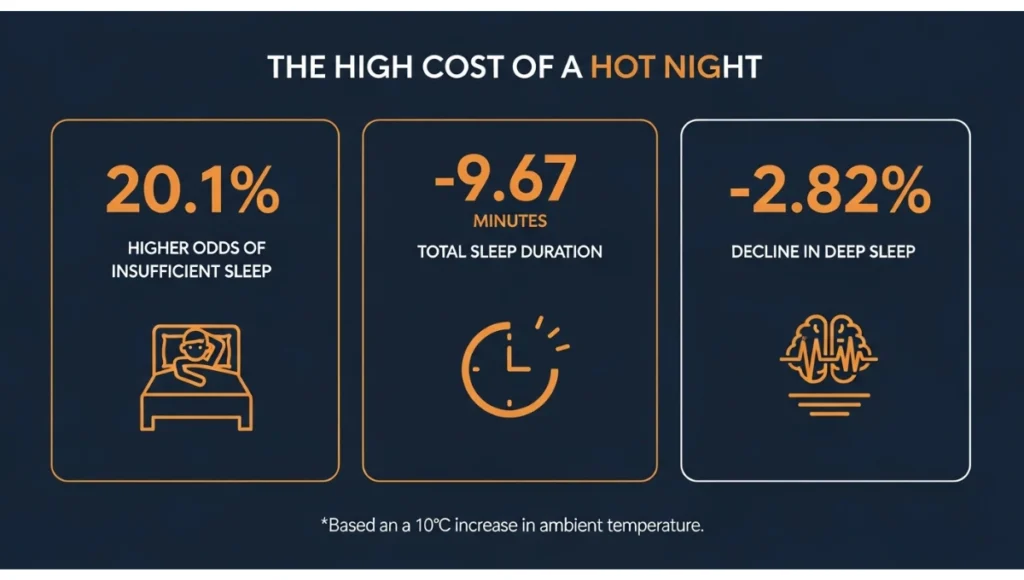
Research shows that for every 18°F increase in room temperature, your chances of poor sleep jump by 20%. You also lose nearly 10 minutes of total sleep time. Deep sleep takes the biggest hit, dropping by almost 3%.
This isn’t just about comfort. Your core temperature naturally drops as you prepare for sleep. When your mattress or bedroom is too hot, your body can’t complete this cooling process. You wake up more often and spend less time in restorative sleep stages.
Cold rooms create problems too. Shivering and discomfort fragment your sleep cycle, leaving you tired the next day.
The ideal sleep temperature sits around 65°F. But maintaining that environment gets complicated when you’re dealing with Florida humidity or North Dakota winters. Standard mattresses can’t adapt to these extremes.
The Health Connection
Poor sleep from temperature issues affects more than just your energy levels.
Chronic sleep disruption impacts memory, immune function, and mood regulation. Your body repairs itself during deep sleep stages. When heat or cold prevents you from reaching those stages consistently, you miss out on essential restoration.
Studies on adaptive thermal regulation show impressive results. Women using temperature-responsive mattresses experienced a 12.3% increase in deep sleep percentage. This demonstrates how proper mattress temperature regulation directly improves sleep quality.
Regional Climate Challenges
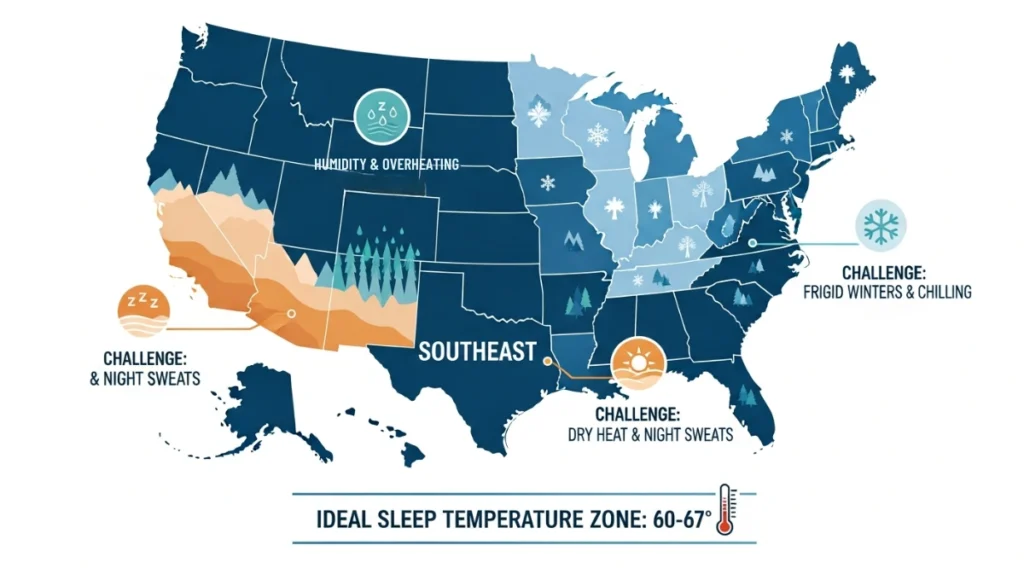
The United States covers multiple climate zones with distinct challenges.
Southeastern states deal with humid subtropical conditions. High humidity makes rooms feel warmer and creates sticky, uncomfortable sleep surfaces. The Southwest faces dry desert heat that radiates through traditional mattress materials.
Northern regions battle frigid winters where standard mattresses feel like ice blocks. Coastal areas experience dramatic temperature swings between seasons.
A mattress that works in Seattle might fail in Miami. This reality drives demand for adaptable sleep technology across North America, which now holds a significant share of the smart bed market.
How Smart Mattresses Control Temperature
Smart mattresses use technology that goes far beyond breathable fabric.
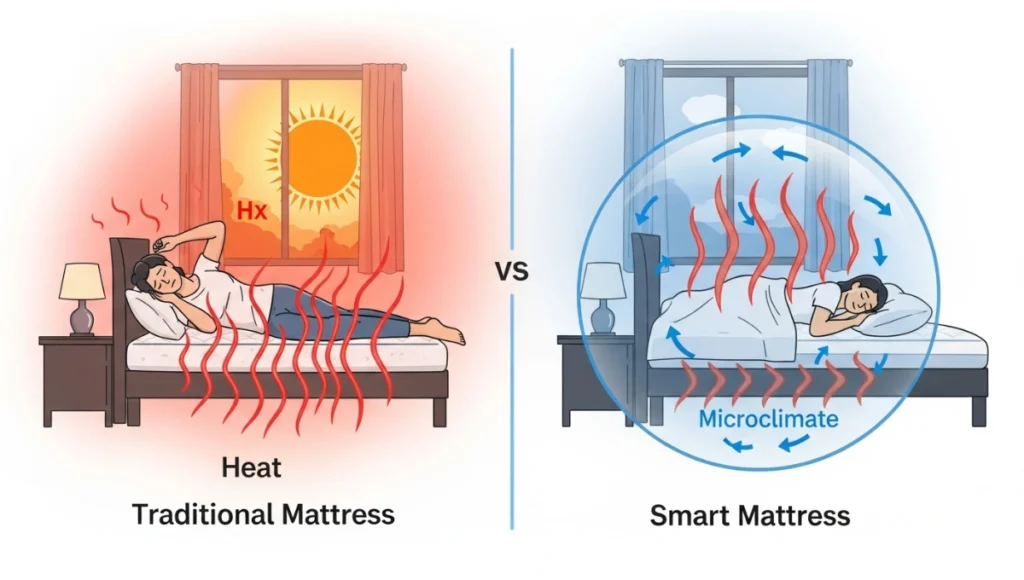
These systems actively add or remove heat from your sleep surface. Traditional mattresses rely on passive materials like foam or springs. Smart mattresses incorporate electronic components that respond to temperature changes in real-time.
Active Climate Control Systems
The core technology involves dynamic heating and cooling mechanisms.
Some systems circulate temperature-controlled air through channels in the mattress. Small, quiet fans move this air across your body. Other models use thermoelectric modules that generate heat or cold on demand.
Water-based systems pump heated or chilled water through thin tubes embedded in a mattress topper. This provides consistent temperature across the entire sleep surface.
Users typically control these systems through smartphone apps. You set your preferred temperature—anywhere from 55°F to 110°F in most models—and the system maintains it throughout the night. The technology adjusts automatically when ambient temperatures change.
This responsiveness means the mattress adapts as your bedroom heats up during the day or cools down overnight.
Passive Cooling Materials
Many smart mattresses combine active systems with advanced materials.
Phase change materials absorb excess body heat as they shift from solid to liquid. They release this stored heat back into the room as they resolidify. This creates a buffer against temperature spikes.
Gel-infused foams address traditional memory foam’s heat retention problem. Gel beads throughout the foam absorb and disperse heat away from your body.
Copper and graphite infusions conduct heat efficiently. These materials pull warmth away from pressure relief points and distribute it across the mattress structure.
Breathable covers made from Tencel or bamboo wick away moisture while allowing airflow. Open-cell foam construction with air channels enhances this passive cooling effect.
The cooling mattress market is growing at 6.5% annually through 2032, reflecting strong consumer demand for these materials.
Dual-Zone Systems
Couples face a common problem: different temperature preferences.
Dual-zone climate control solves this by dividing the mattress into independently controlled sides. One partner might prefer 62°F while the other needs 68°F. Each person gets exactly what they want without compromise.
This feature eliminates the “blanket tug-of-war” that disrupts many couples’ sleep. Both individuals can reach their optimal sleep temperature simultaneously. The system maintains these separate zones throughout the night with no temperature bleeding between sides.
This technology represents a major advancement in shared sleep comfort. It acknowledges that thermal needs vary between individuals and provides a practical solution.
Smart Features Beyond Temperature Control
Temperature regulation forms the foundation, but modern smart mattresses offer much more.
These additional features work together to create a complete sleep optimization system. They enhance the core temperature functions and provide insights that help you sleep better over time.
AI Sleep Tracking
Embedded sensors monitor your sleep throughout the night.
These sensors track sleep duration, sleep stages (light, deep, and REM), heart rate, heart rate variability, and breathing patterns. The data flows to AI algorithms that analyze your sleep quality and identify patterns.
The real power comes from proactive adjustments. Instead of just recording data, the system uses what it learns to optimize your environment automatically. If the AI detects you’re entering deep sleep, it might adjust the temperature slightly to help you stay in that restorative stage longer.
Some systems include “Smart Temp Autopilot” features. These learn your preferences over time and make temperature changes before you realize you need them. The mattress essentially predicts what you’ll want based on your sleep stage and historical data.
This creates a feedback loop where your sleep quality improves because the mattress continuously adapts to your body’s signals.
Adjustable Firmness
Support matters as much as temperature for quality sleep.
Many smart mattresses include air chambers that inflate or deflate through app control. You can adjust firmness from soft to extra-firm, finding the exact support level your body needs. This adjustability helps maintain proper spine alignment regardless of your sleeping position.
The combination of adjustable firmness and temperature control is powerful. You might need firm support for back pain but also prefer a cool sleep surface. Smart mattresses deliver both simultaneously without compromise.
Memory foam and hybrid constructions in these mattresses provide pressure relief at key points. When you can customize both the support level and the temperature, you eliminate the most common sleep complaints. Your mattress fits your body perfectly while maintaining your ideal climate.
Smart Home Integration
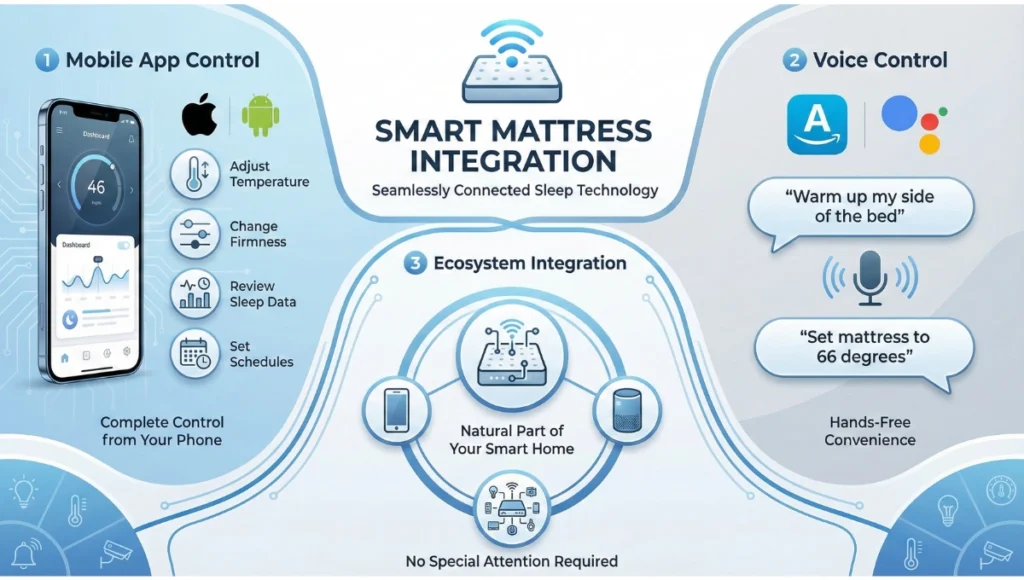
Modern smart mattresses connect seamlessly with your existing technology.
Dedicated mobile apps for iOS and Android provide full control over all mattress functions. You adjust temperature, change firmness, review sleep data, and set schedules from your phone.
Voice control takes convenience further.
Compatibility with Amazon Alexa and Google Assistant means you can make adjustments without reaching for your phone. Simple voice commands like “warm up my side of the bed” or “set mattress to 66 degrees” work instantly.
This integration makes the mattress feel like a natural part of your smart home ecosystem rather than a separate device requiring special attention.
Additional Wellness Features
Premium models include features designed specifically for better sleep and easier mornings.
Silent alarms use gentle vibrations or gradual temperature changes to wake you. One partner can get up without disturbing the other—a significant benefit for couples with different schedules.
Integrated audio systems play white noise, nature sounds, or guided meditations. These mask external disruptions and help you relax before sleep.
App-based coaching goes beyond raw data display. The apps analyze trends over weeks and months, then provide personalized recommendations for improving your sleep hygiene. You learn how factors like exercise timing, caffeine intake, or room temperature affect your sleep quality.
Smart adjustable base compatibility adds zero-gravity positioning, under-bed lighting, and massage functions. These work in concert with temperature control to create a comprehensive relaxation and sleep system.
Choosing the Right Smart Mattress for Your Needs
Finding your ideal smart mattress requires evaluating several key factors.
The right choice depends on where you live, how you sleep, and what features matter most to you. A systematic approach helps narrow down options.
Assess Your Climate
Start by understanding your local environment and its challenges.
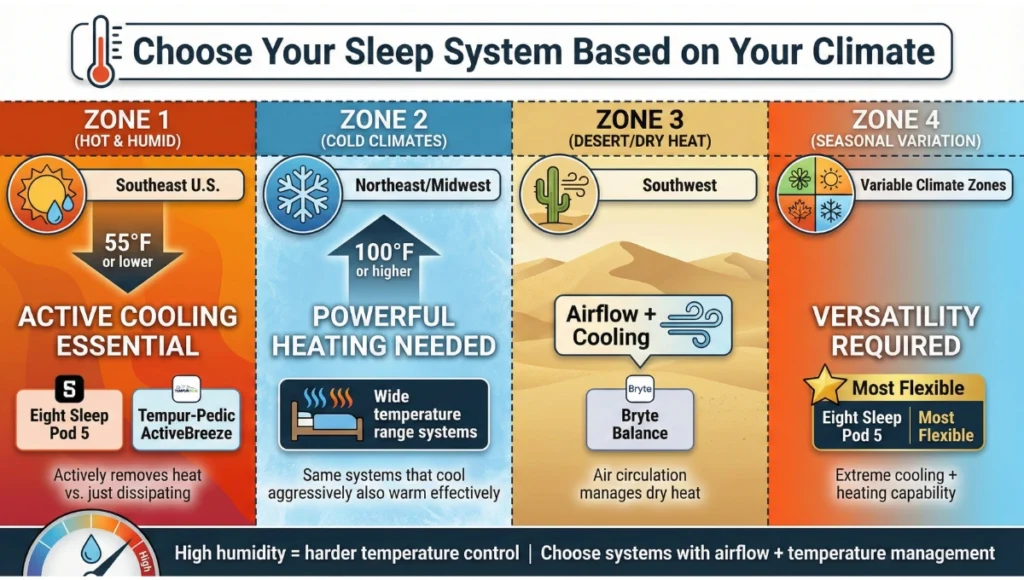
Hot, humid climates like the Southeast require powerful active cooling. Look for wide temperature ranges that go down to 55°F or lower. Models like the Eight Sleep Pod 5 or Tempur-Pedic ActiveBreeze excel here because they actively remove heat rather than just dissipating it.
Cold climates need effective heating capabilities. The same wide temperature range that provides cooling also delivers warmth. Systems that reach 100°F or higher ensure comfort during harsh winters in the Northeast or Midwest.
Desert climates present dry heat that requires different management than humidity. Strong cooling with good airflow works best. The Bryte Balance’s air circulation system handles dry conditions effectively.
Seasonal variation zones need versatile systems that perform well at both extremes. The Eight Sleep Pod 5 offers the most flexibility here, with its ability to cool aggressively in summer and warm substantially in winter.
Consider typical humidity levels in your area. High humidity makes temperature control more challenging. Systems that manage airflow alongside temperature provide better results in these conditions.
Understand Your Personal Preferences
Your body’s thermal regulation matters more than generic recommendations.
Hot sleepers need maximum cooling power and should prioritize models with the lowest temperature settings. The Tempur-Pedic ActiveBreeze specifically targets this group with its 10°F cooling capability.
Cold sleepers benefit from effective heating and good insulation. Check that the system maintains warmth consistently rather than creating hot spots.
Couples with different needs must have dual-zone control. This feature is non-negotiable if partners have more than a few degrees difference in preferred temperature. All four recommended models offer this capability.
Sleep position affects temperature needs too. Stomach sleepers often run hotter than back or side sleepers. Side sleepers need both temperature control and good pressure relief at shoulders and hips.
Think about whether you want automation or manual control. AI-driven systems like Eight Sleep’s Autopilot adjust without your input. Other models require you to set preferences through the app.
Budget and Value Analysis
Smart mattresses represent significant investments ranging from roughly $2,000 to over $5,000.
Premium models ($4,000+) like the Eight Sleep Pod 5 and Tempur-Pedic ActiveBreeze provide the most advanced features. You get superior temperature ranges, AI automation, comprehensive sleep tracking, and premium materials. These make sense if you struggle significantly with sleep quality and need maximum performance.
Mid-range options ($2,500-$3,500) like the Bryte Balance or Saatva Solaire deliver solid temperature control with fewer advanced features. The value proposition improves here for users who don’t need cutting-edge AI but still want reliable climate management.
Consider the long-term investment perspective. Better sleep improves health, productivity, and quality of life. The global smart bed market is projected to reach $4.1 billion by 2033, indicating growing recognition of these benefits.
Check warranty terms carefully. Longer warranties protect your investment and indicate manufacturer confidence. Most quality smart mattresses include 10-year warranties on the mattress itself, with shorter coverage on electronic components.
Subscription costs matter for some models. Eight Sleep requires ongoing membership for full features. Factor this into your total cost calculation when comparing options.
Smart Home Compatibility
Integration with existing technology enhances usability and convenience.
Verify that the mattress works with your preferred smart home platform. Most models support Amazon Alexa and Google Assistant, but confirm before purchasing.
App quality varies between brands. Read reviews about app reliability, ease of use, and feature completeness. A frustrating app undermines the benefits of smart technology.
Check whether the system requires constant internet connectivity or can function offline. Network outages shouldn’t prevent basic temperature control.
Some systems integrate with other health tracking devices like Apple Watch or Fitbit. This creates a more complete picture of your health and sleep patterns.
Material and Construction Preferences
The mattress foundation still matters alongside smart features.
Memory foam provides excellent pressure relief and contouring. It cradles your body and reduces pressure points at shoulders and hips. This benefits side sleepers particularly. Modern cooling-infused memory foams address traditional heat retention issues.
Hybrid constructions combine foam comfort layers with innerspring support cores. These offer more bounce and breathability than all-foam designs. They suit stomach and back sleepers who need firm support with some cushioning.
Air chamber systems like the Saatva Solaire provide the most adjustability but feel different from traditional mattresses. Try this style if possible before committing.
Cover materials impact breathability and feel. Tencel, bamboo, and performance fabrics wick moisture and allow airflow. These complement active temperature systems effectively.
Consider whether you prefer plush comfort or firm support as your baseline. Smart temperature control works with any firmness level, so choose the underlying construction that suits your body and sleeping position.
Smart Mattress Temperature Regulation FAQs
The following answers address the most common questions about smart mattress temperature regulation, climate performance, energy use, and long-term reliability across US climate zones.
Do smart mattresses actually cool you down, or do they just feel cooler?
Smart mattresses with active temperature regulation physically change the temperature of the sleep surface using air, water, or thermoelectric systems. This is different from passive cooling materials, which only slow heat buildup rather than removing heat.
Summary: Smart mattresses with active systems actually cool or warm the sleep surface, not just create a cooling sensation.
What’s better for temperature control: water-based or air-based systems?
Water-based systems provide more precise and stable temperature control because water transfers heat more efficiently than air. Air-based systems are simpler and quieter but typically have a narrower effective temperature range.
Summary: Water-based systems deliver more accurate and consistent temperature regulation than air-based systems.
Are smart mattresses worth it in humid climates like Florida or Texas?
Yes. High humidity reduces the body’s ability to cool itself, making sleep more sensitive to surface temperature. Smart mattresses with active cooling and airflow significantly improve sleep comfort in humid environments.
Summary: Smart mattresses are effective in humid climates because they actively control surface temperature where humidity impacts sleep most.
Can couples set different temperatures on each side of the bed?
Yes. Most premium smart mattresses offer dual-zone temperature control, allowing each side of the bed to maintain a separate temperature without affecting the other.
Summary: Dual-zone smart mattresses allow couples to set independent temperatures on each side of the bed.
What temperature should I set my smart mattress to for the best sleep?
Sleep research shows most people sleep best when the sleep surface supports a natural drop in core body temperature. This typically corresponds to mattress settings between 60°F and 68°F, depending on personal preference.
Summary: Most users achieve optimal sleep with smart mattress temperatures set between 60°F and 68°F.
Do smart mattresses work if my room doesn’t have AC?
Yes. Smart mattresses regulate temperature directly at the sleep surface and do not rely on room air conditioning. Performance may decrease in extreme heat, but comfort still improves significantly.
Summary: Smart mattresses work without AC because they control temperature at the mattress level, not the room level.
Do smart mattresses require a subscription?
Some manufacturers require a subscription for advanced features such as AI-driven automation, detailed sleep analytics, or cloud-based data access. Basic temperature control usually functions without a subscription.
Summary: Subscriptions are typically required only for advanced analytics and automation, not core temperature control.
How much electricity do smart mattresses use?
Most smart mattresses use relatively low power, typically consuming less energy than a space heater. Average nightly usage generally ranges from 0.1 to 1.5 kWh, depending on system type and settings.
Summary: Smart mattresses use modest electricity, comparable to or less than common household comfort devices.
How long do active cooling and heating systems last?
Active temperature regulation components are designed for long-term residential use and typically last 8–10 years. Electronic components usually have shorter warranty coverage than the mattress structure.
Summary: Active cooling and heating systems are built to last approximately 8–10 years under normal use.
Is a smart cover better than a smart mattress for cooling?
In most cases, yes—smart mattress covers provide more powerful and precise cooling. This is because they use dedicated active systems (such as water or air circulation), while many smart mattresses offer limited or passive temperature control.
For a detailed comparison of cooling performance, features, and cost, see our guide on smart mattress vs smart bed vs smart mattress covers.
Smart Mattress Temperature Control & US Climate Zones: Final Thoughts
Smart mattresses with reliable temperature regulation represent a proven solution to inconsistent sleep quality.
The technology has matured beyond early adoption into dependable systems that deliver measurable results.
Whether you choose the Eight Sleep Pod 5’s advanced AI automation, Tempur-Pedic’s powerful cooling, Bryte’s airflow management, or Saatva’s adjustable firmness—you’re investing in better health and daily performance.
Match the mattress to your climate challenges and personal preferences. Consider your budget. Then make the decision.
Don’t spend another year fighting your mattress for decent sleep. Every night of tossing, turning, and waking up exhausted steals energy from tomorrow. The right smart mattress ends that cycle and gives you the restorative rest your body needs to thrive. Your sleep quality—and your health—deserve this investment.
Take control of your sleep environment today.